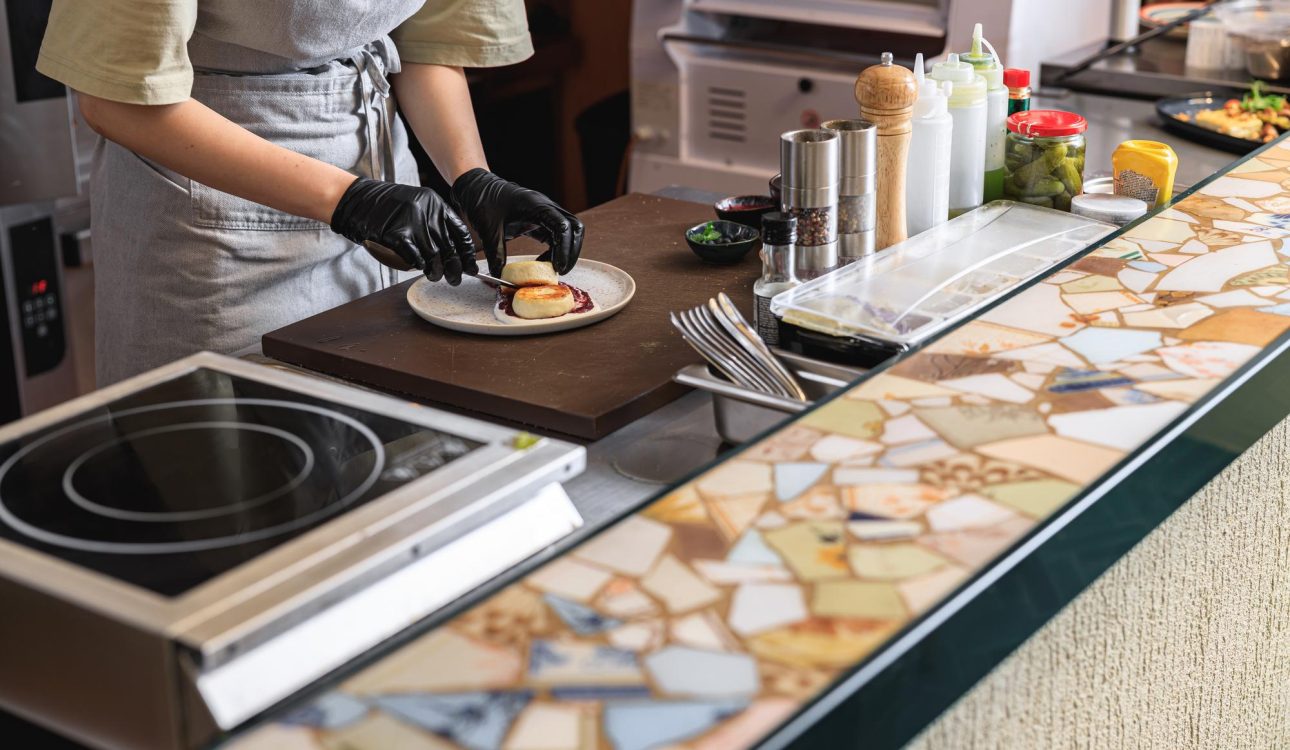
When specifying materials for commercial projects in Costa Rica’s Southern Zone, architects and developers face the challenge of balancing aesthetics, durability, and functionality. Granite for commercial spaces stands out as a comprehensive technical solution that meets the demands of high foot traffic, exposure to liquids, and constant loads—characteristics typical of restaurants, cafés, and gastronomic venues. Understanding the technical specifications of this imported natural material is essential to ensure successful projects that stand the test of time without compromising investment.
The choice of exotic granite in commercial environments is not just an aesthetic decision. It is a strategy based on measurable physical properties that determine the material’s performance under real operating conditions. From abrasion resistance to absorption coefficients, each technical parameter directly influences the lifespan of surfaces and long-term maintenance costs.
Strength and Absorption Criteria for Granite in Commercial Spaces
Natural granite has an average density between 2.63 and 2.75 g/cm³, giving it exceptional compressive strength that exceeds 200 MPa in high-quality varieties. This feature is critical in spaces where heavy foot traffic and constant movement of furniture can deteriorate less resistant materials. For restaurants in the areas of Pérez Zeledón, Jacó, Dominical, and Uvita, where tourist flow leads to intensive use, this property translates into surfaces that maintain their structural integrity for decades.
The water absorption coefficient of granite ranges between 0.2% and 0.4%, well below the 0.5% limit set by ASTM C615 for commercial granites. This low level of porosity prevents the penetration of liquids, fats, and acids common in professional kitchens, protecting the stone from permanent stains and bacterial growth.
Recommended Technical Thicknesses and Finishes
The selection of the appropriate thickness depends directly on the final application and expected loads. For granite tables in restaurants and service counters, a minimum thickness of 3 cm (30 mm) is recommended, providing the necessary rigidity to withstand impacts, point loads, and the weight of service equipment. In professional kitchen countertops where heavy equipment is installed or tasks that generate vibration are performed, up to 4 cm or additional structural reinforcements may be specified.
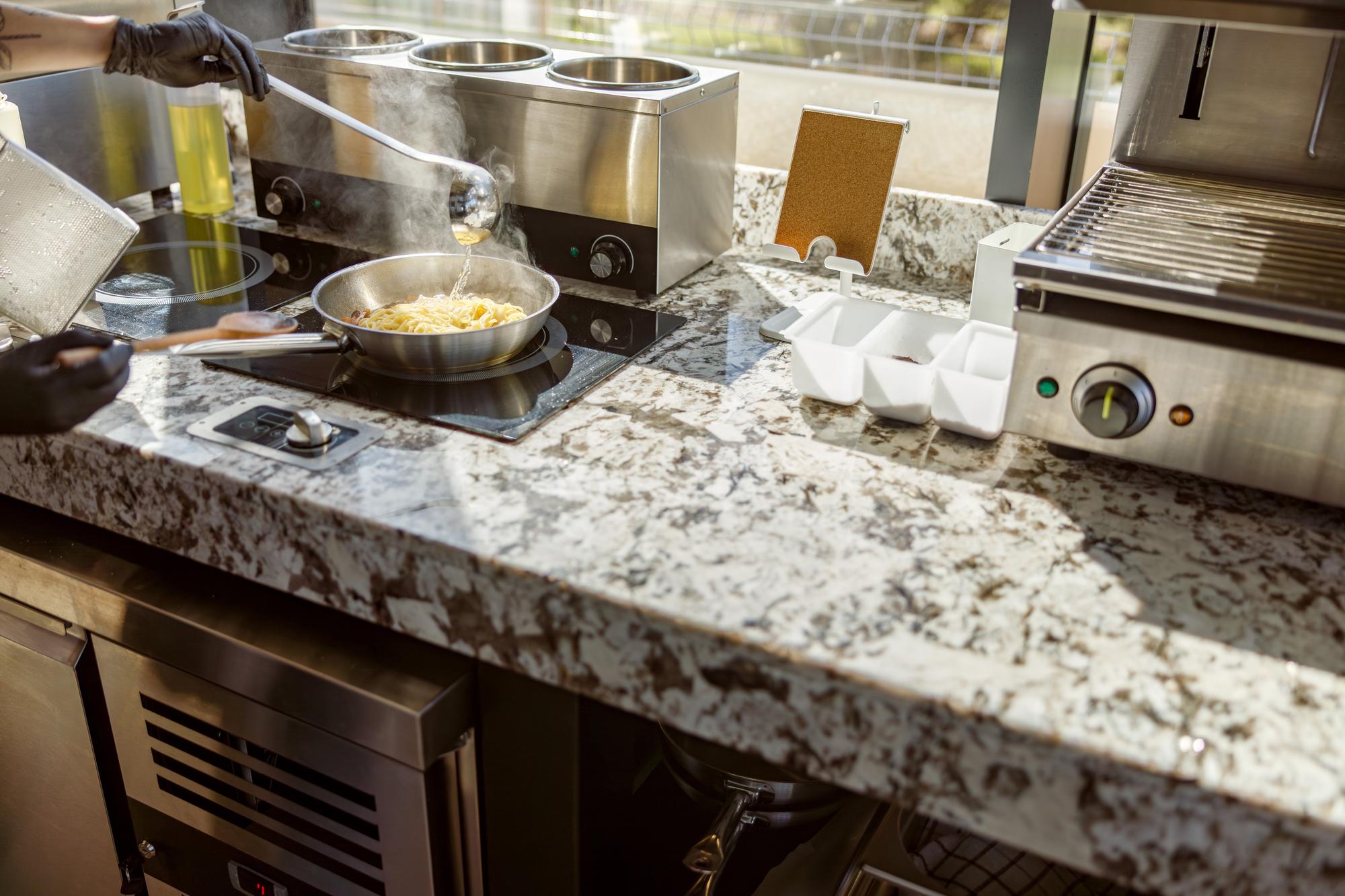
Surface finishes modify both the aesthetics and functional properties of granite. Mirror polishing maximizes resistance to liquid penetration by sealing the natural microporosity, while flamed or honed finishes increase the coefficient of friction in commercial floors, reducing the risk of slipping in wet areas. Exotic granite allows for multiple finishes to be specified according to the application area within the same project, maintaining visual continuity with differentiated safety.
Recommended finishes by area of use
- Glossy polish: ideal for countertops, bars, and vertical surfaces where easy cleaning is required
- Satin honed: recommended for prep areas where aesthetics are combined with safety
- Thermal flamed: specified for high-traffic floors and outdoor areas exposed to moisture
- Brushed: suitable for tactile surfaces in customer service areas
Installation Considerations and Structural Compatibility
Proper installation of granite in commercial projects requires technical protocols that go beyond simple placement. The substrate must have a maximum flatness of 3 mm over 3 linear meters, verified with a laser level, to avoid differential stresses that could cause microcracks. In commercial projects where piece dimensions exceed 2 linear meters, complementary mechanical anchoring systems are required in addition to epoxy adhesive, especially for vertical applications or cantilevered countertops.
Adhesives and bonding mortars should be specified according to ANSI A118.4 standards for high-strength adhesives, with an elastic modulus sufficient to absorb differential thermal expansions between the granite and the substrate. In professional kitchens where thermal variations can reach ranges of 40°C, this technical detail prevents premature detachment and cracking. The perimeter expansion joint, commonly 5 mm, should be sealed with neutral silicone to prevent load transfer from the building system to the stone.
Preventive Maintenance in High-Use Environments
Although granite offers superior chemical resistance, preventive maintenance significantly extends its lifespan in demanding commercial environments. The application of fluoropolymer-based penetrating sealers is recommended every 12 to 18 months in food preparation areas, creating an invisible barrier that enhances stain resistance without altering the natural appearance. Daily cleaning should be performed with neutral pH solutions that do not compromise these protective treatments.
For architects specifying materials in the Southern Zone, it is essential to work with suppliers who offer not only the supply but also proven installation experience and post-delivery maintenance services. Material traceability, from the quarry to final installation, ensures authenticity and the declared technical properties—a decisive factor for the success of the commercial project.
Transform your commercial environments with imported materials of proven quality. At Imagine Group we specialize in the design, fabrication, and installation of architectural surfaces in natural stone for high-demand projects in Costa Rica. Request information to quote your commercial project today and ensure flawless finishes with the support of design and construction experts.